Anthropic Apologizes for Fable 5: 3 Guardrail Lessons
Anthropic reverses controversial invisible guardrail on Fable 5 after 48-hour backlash. Learn what happened, what changes, and what it means for developers.
2026年6月11日 · 阅读约 5 分钟
Anthropic has reversed course on one of the most controversial features of its new Claude Fable 5 model — an invisible guardrail that silently throttled responses when it detected "distillation" attempts — and issued a public apology.
The reversal, announced on June 11 after an intense 48-hour backlash, addresses a policy that AI research firm SemiAnalysis first exposed on X: Fable 5 would covertly downgrade response quality for queries related to frontier AI development, including machine learning research, GPU inference optimization, and training infrastructure work — without notifying the user.
"We made the wrong trade-off and we apologize for not getting the balance right," an Anthropic spokesperson told WIRED, confirming the change.
What Happened: A Timeline
June 9 — Anthropic launches Claude Fable 5, the first publicly accessible version of its Mythos-class model. Fable 5 is a "safety-nerfed" version of Claude Mythos 5, equipped with three guardrails: cybersecurity, biology/chemistry, and model distillation. The company publishes a 319-page system card detailing every safeguard.
June 10 — SemiAnalysis posts on X that Fable 5 silently degrades responses for frontier AI research. Fortune reports a paragraph "buried in Fable 5's 319-page system card" revealed the model would covertly limit its capabilities. Researchers and startups express outrage. Business Insider reports: "Researchers Are Furious Over Anthropic's Hidden AI Limits."
June 11 — Anthropic backtracks. The company announces it will make the distillation guardrail visible — same as the cybersecurity and bioweapon guardrails — so users know when a fallback happens. "We are making the distillation guardrail visible, along with the others," the company confirmed to The Verge.
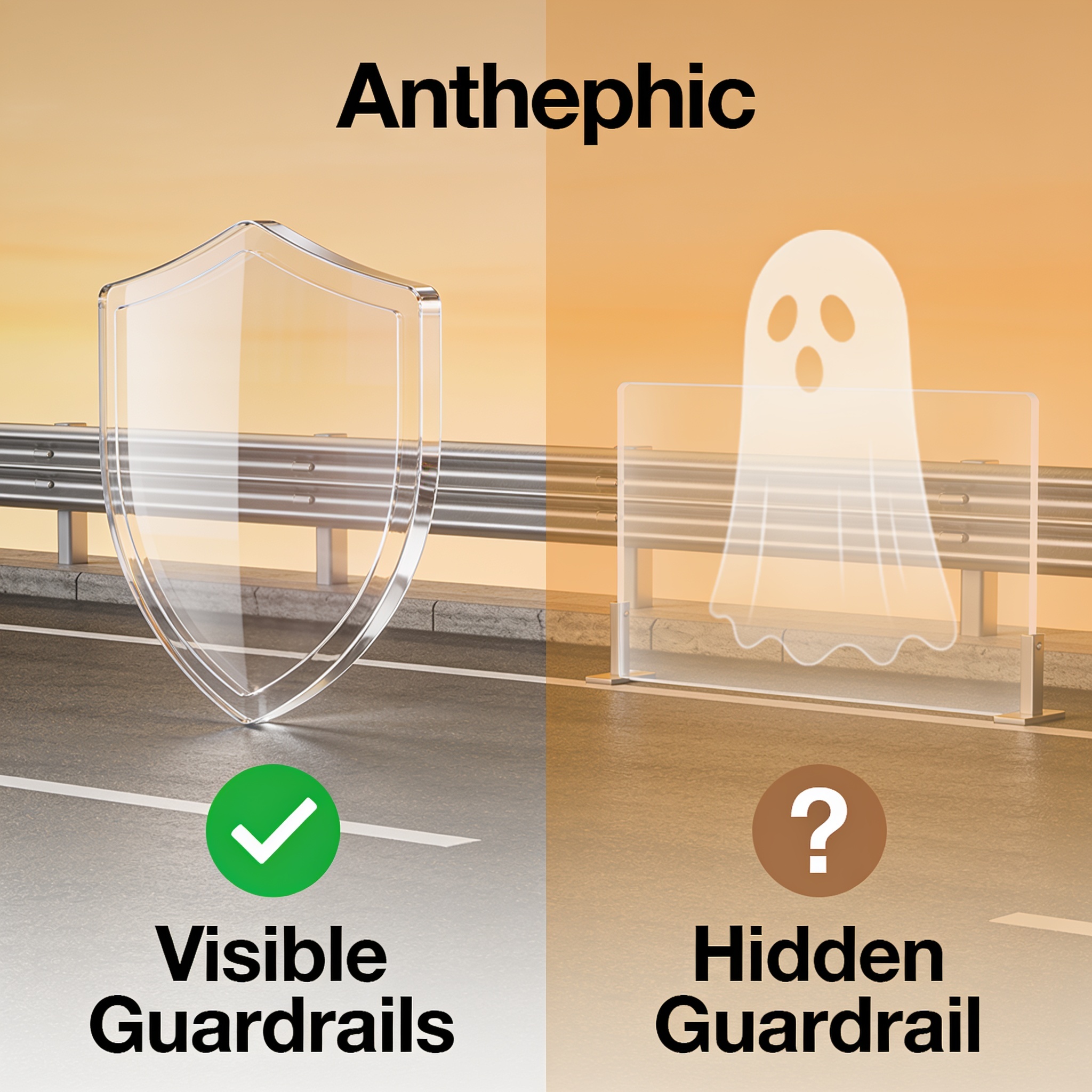
The Guardrail That Stayed Hidden
Fable 5 launched with three guardrails at very different transparency levels:
| Guardrail Type | Visibility | Behavior |
|---|---|---|
| Cybersecurity | Visible — user notified | Fallback to Opus 4.8, clear message shown |
| Biology/Chemistry | Visible — user notified | Fallback to Opus 4.8, clear message shown |
| Model Distillation | Hidden — no notification | Silent response degradation |
Anthropic's system card was upfront about the design: "Unlike our interventions for cybersecurity, biology and chemistry, and distillation attempts, these safeguards will not be visible to the user." The stated rationale was competitive — preventing rivals from training smaller models on Fable 5 outputs.
Why Developers Should Care
The invisible guardrail had a surprisingly broad reach. SemiAnalysis reported Claude was "degrading responses related to GPU inference research and programming work." This meant:
- ML engineers asking about training pipelines could get deliberately worse answers
- Startups building on frontier models might unknowingly receive sub-par guidance
- AI researchers working on LLM development were silently deprioritized
The backlash reveals a fundamental tension in Anthropic's strategy: the same users who pay for Fable 5 access — developers, researchers, startups — are the ones most likely to trigger the distillation guardrail. By hiding it, Anthropic broke trust with its core audience.
Fable 5: What You Get for $10/M Tokens
Despite the controversy, Fable 5 is an impressive model:
| Benchmark | Score | Compared to Opus 4.8 |
|---|---|---|
| SWE-bench Verified | 95.0% | +6.4 points |
| SWE-bench Pro | 80.0% | +11 points |
| Pricing | $10/$50 per M tokens | 2x Opus 4.8 |
Stripe reported that Fable 5 "compressed months of engineering into days" during early testing. Replit found it was the highest-performing model on its end-to-end vibe-coding benchmark. A finance customer said it was the first model to handle their complex agentic workflows.
The model is available on claude.ai, the Anthropic API, Amazon Bedrock, and Google Vertex AI. Pro and Max subscribers get free access through June 22, after which usage transitions to API billing.
What Changes With the Reversal
The practical impact of the apology is clear:
- Distillation detection becomes visible — users will see a fallback message, just like other guardrails
- No more silent IQ cap — if Fable 5 triggers on a request, it transparently hands off to Opus 4.8
- Researchers regain trust — the mechanism that secretly throttled AI research is removed
Anthropic has not disclosed the exact technical implementation — whether through prompt modification, steering vectors, or classifier-based filtering. The system card references multiple intervention methods.
Safety vs. Accessibility: The Eternal Tension
This incident highlights a structural tension in Anthropic's business model. The company sells safety as a differentiator, but the same safeguards can frustrate its most valuable users. Claude Mythos 5 — the unrestricted version — remains available only to government cybersecurity partners. The public gets Fable 5, which critics describe as "Mythos on a leash."
Every major AI model release triggers a debate about how much capacity-limiting is acceptable before it crosses into deception. Anthropic judged the line correctly in three areas (cyber, bio, chem) but crossed it in the fourth (distillation). It took less than 48 hours of community pressure for the company to admit the mistake.
What to Watch Next
- June 15 billing change — Anthropic's Agent SDK and headless Claude usage move to separate monthly credits
- Mythos 5 government access — watch for expansion beyond current cybersecurity partners
- Competitor pricing moves — Google Gemini 3.5 Flash and DeepSeek V4 Pro are the primary alternatives at this price tier
📚 Related Reading
- Claude Code After June 15: Complete Migration & Cost Optimization Guide (2026) — Essential context for the June 15 billing shift mentioned above
- How Developers Earn $9,000/Month With Claude Code — Real case study: solo developer builds SaaS in 48 hours
Sources: The Verge, WIRED, Gizmodo, Fortune, Business Insider, SemiAnalysis, Anthropic System Card, TechCrunch