Alibaba Open Sources Open Code Review: Deterministic Engineering × Agent Hybrid for AI Code Review
Alibaba open-sources its internally-used AI code review CLI tool Open Code Review. Uses a deterministic engineering × agent hybrid architecture to solve coverage drift and position offset problems. Has identified millions of code defects internally.
Public-source compilation
Synthesized from public posts/docs. Prefer the original source for primary claims.
How we review content · Primary source · independent-research
Key Takeaways
Alibaba Group has open-sourced its internally-used AI code review CLI tool Open Code Review (OCR), which has served tens of thousands of developers internally and identified millions of code defects over two years. Unlike mainstream AI code review solutions, OCR uses a deterministic engineering × agent hybrid architecture — file selection, bundling, and rule matching are guaranteed by engineering logic, while the AI agent focuses on dynamic decisions and contextual retrieval. Just configure a model endpoint to get started.
Key Points
- Announced: June 5, 2026 (Hacker News front page, 206 points)
- Audience: Development teams using AI-assisted code review
- Core innovation: Deterministic constraints + Agent hybrid architecture solves coverage drift and position offset problems of pure language-driven solutions
Background
Open Code Review originated as Alibaba Group's internal AI code review assistant. After two years of large-scale validation, it was open-sourced to the community. On June 5, it hit the Hacker News front page with 206 points and 60 comments.
The project is distributed as an NPM package @alibaba-group/open-code-review and used via the ocr command. It supports GitHub Actions integration, Claude Code plugins, and standalone CLI.
The Three Pain Points of General-Purpose Agents
OCR's README candidly lists three hard problems with using general-purpose AI agents for code review:
| Pain Point | Symptom | Root Cause |
|---|---|---|
| Incomplete coverage | Agents "cut corners" on large changesets, reviewing only some files | Pure language architecture lacks hard constraints on the review process |
| Position drift | Review comments don't match actual code locations | LLMs imprecise at line-level code location perception |
| Unstable quality | Minor prompt tweaks cause drastic quality fluctuations | Natural-language-driven Skills are hard to debug and solidify |
These pain points—if you've used Claude Code or Codex for code review—should be all too familiar.
Core Design: Deterministic Engineering × Agent Hybrid
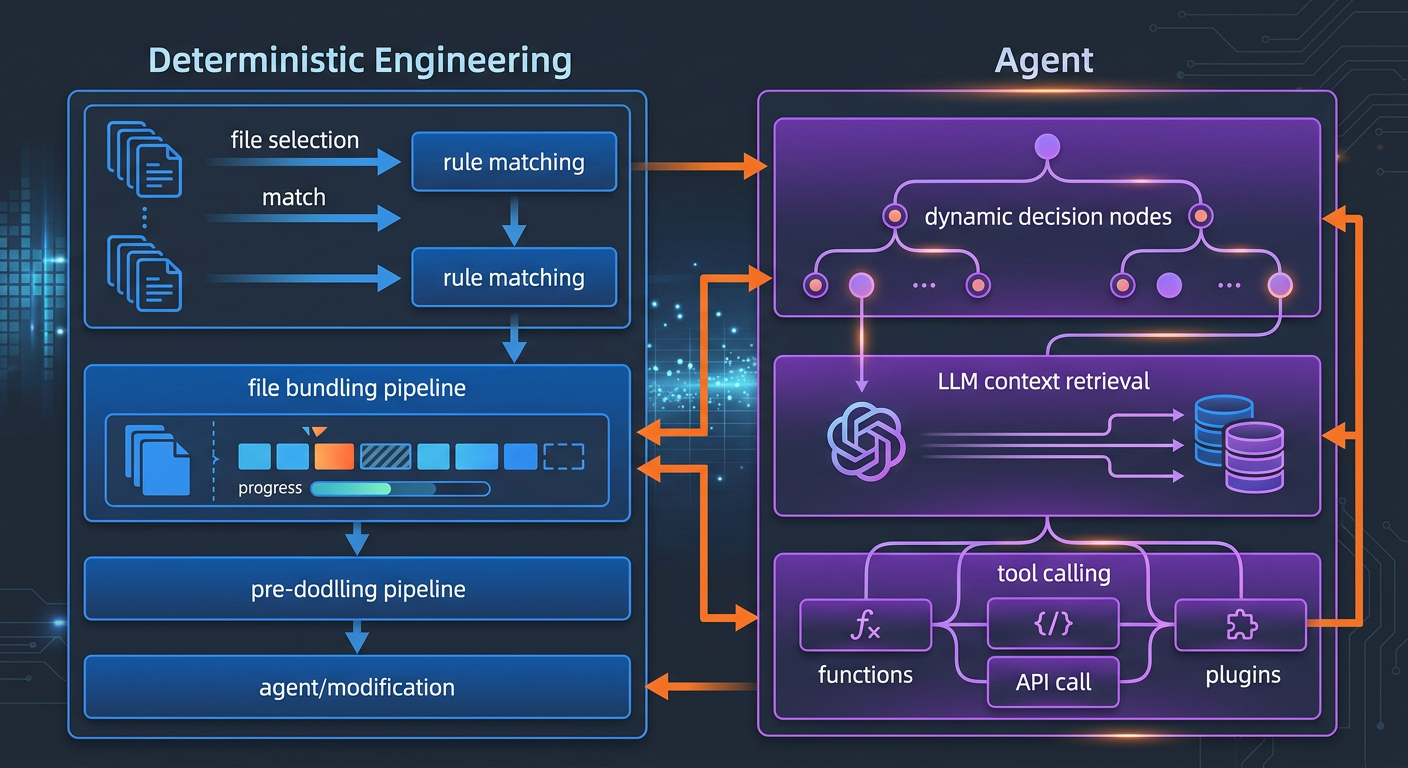
OCR's core philosophy is to separate concerns between deterministic engineering and Agent, each handling what it does best.
Deterministic Engineering — Hard Constraints
- Precise file selection: Determines exactly which files need review and which to filter out
- Smart file bundling: Related files (e.g.,
message_en.propertiesandmessage_zh.properties) are bundled into a single review unit, each running as an independent sub-agent - Fine-grained rule matching: Review rules are matched to file characteristics, keeping the model's attention sharply focused
- External positioning and correction modules: Independent modules systematically improve the location accuracy and content accuracy of AI feedback
Agent — Dynamic Decisions
The agent's energy is concentrated where it matters most:
- Scenario-optimized prompt templates: Prompts deeply optimized for code review, improving effectiveness while reducing token consumption
- Scenario-optimized toolset: Distilled from large-scale production data analysis (call frequency distributions, per-tool repetition rates, impact on the overall call chain)
Built-in Rule Engine
OCR comes with review rules for 15 languages: Java, TypeScript/JavaScript, Python (default rules), C/C++, Kotlin, ArkTS, and config formats like JSON, YAML, Properties. Rule files are currently in Chinese, with community volunteers providing English translations.
Community Reaction
The HN discussion centered on two main topics:
Benchmark: 74% Recall vs 12% Precision
User eranation tested OCR on a subset of 10 PRs from the Martian Code Review Benchmark (50 PRs):
- Recall ~74%: Found most golden issues, solid performance
- Precision ~12%: High false positive rate, F1 around 20%
This sparked the classic "recall vs precision" debate:
"Finding problems is optimizing for the customer. Avoiding false positives is optimizing for the developer. Which is right depends on your org's culture." — onion2k
"It's like security tools with 90% false positive rate — people learn to ignore the warnings." — chaoz_
Competitive Landscape
HN commenters mentioned several alternatives:
- CodeRabbit: $30/month/developer, praised for finding real logic bugs but had a major security vulnerability (PR to RCE)
- Cursor BugBot: Popular at $40 flat fee, now switched to per-use pricing
- Custom Skills: Multiple users built their own review toolchains with Claude Code
Multi-Model Review Strategy
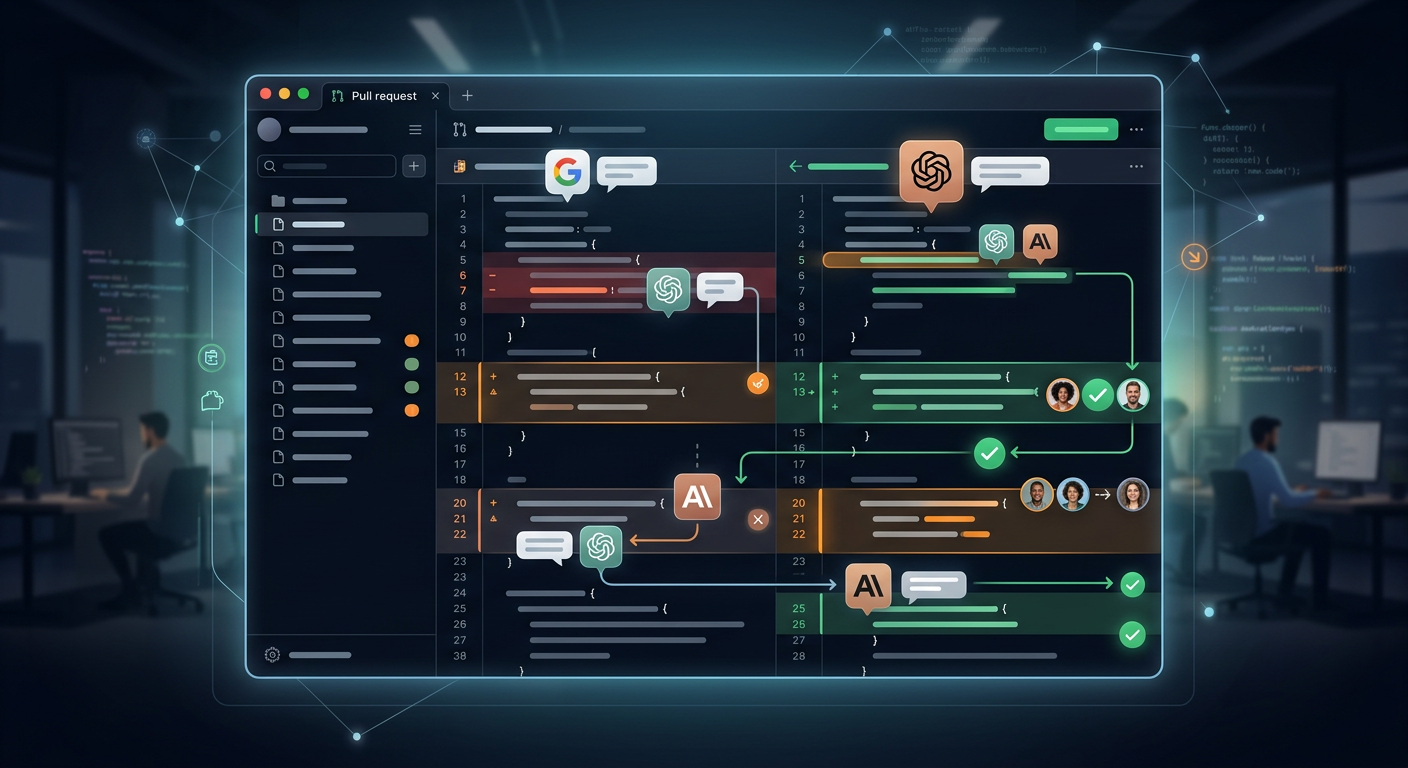
"I use Opus for writing code and GPT-5.5 for peer review via automated Skills. Different models have different training sets — one model's blind spot may be covered by another." — cheema33
How to Use
OCR offers multiple integration paths:
Standalone CLI
npm install -g @alibaba-group/open-code-review

# Configure LLM
ocr config set llm.url https://api.anthropic.com/v1/messages
ocr config set llm.model claude-opus-4-6

# Review workspace changes
ocr review

# Review branch differences
ocr review --from main --to feature-branch
Claude Code Plugin
/plugin marketplace add alibaba/open-code-review
/plugin install open-code-review@open-code-review
Then use via the /open-code-review:review slash command.
AI Coding Agent Skill
npx skills add alibaba/open-code-review --skill open-code-reviewAfter installation, the agent automatically invokes ocr for code review.
Recommendations
- Small to mid-size teams: Install the CLI with Claude Code, zero-cost to start
- Automated workflows: Configure GitHub Actions or webhooks for auto-triggered reviews
- Custom rules: Extend the 15 built-in language rules to match your team's coding standards
- Watch false positives: 12% precision means significant manual filtering — use OCR as a supplement, not a replacement
- Multi-model strategy: Different models reviewing the same changeset cross-validate to reduce false positives
Internal Links
- Learn AI security auditing? See: Anthropic Vulnerability Discovery Harness Tutorial
- AI coding agent security setup: AI Coding Agent Security Sandbox Guide
- How to choose your AI coding tools: AI Coding Agent Selection Guide
Topic hub
AI Coding Tools Hub (2026)
From Copilot pricing changes to Claude Code + DeepSeek cost-saving setups—one place to compare tools, read explainers, and follow tutorials.
Explore AI Coding Tools Hub (2026) →Monetization angle
How can you make money from this trend?
WayToClawEarn focuses on verified earn playbooks—not just news. Start from these cases.
DeepSeek + Claude Code Micro SaaS
Run multiple small products on cheap inference
Claude Code bug bounty
Productize agent skills into security services
Related tutorials
- Claude Code Too Expensive? Cut 90%+ Cost with DeepSeek V4 in 10 Minutes
- GitHub Copilot Pricing 2026: Plan Comparison, Monthly Cost, and 3 Ways to Save
- How to turn off signature in VS Code Copilot AI: remove Co-Authored-by with one line of command
- Copilot vs Cursor vs Claude Code (2026): Which Should You Pick?
Related news
- OpenAI Models Land on Google Cloud: Three-Cloud Coverage Complete, Codex Agent Workflows How to Choose
- Anthropic Launches Claude Duet: Proactive AI Agent vs Meta Muse vs OpenAI Dots — How to Choose
- DeepSeek V4.1-Flash-1017 Full Switch: 11 Benchmarks Up, How to Cut Agent Costs?
- DeepSeek Harness v0.2 Desktop Launch: Zero-Config AI Coding Agent, How to Choose?