Anthropic Double Feature: AI Self-Evolution Roadmap + Open-Source Vulnerability Framework
Anthropic dropped two major announcements same day: AI self-evolution roadmap (80% AI-authored code) and open-source vulnerability discovery framework. Together they reveal AI agents transitioning from tools to core infrastructure.
Public-source compilation
Synthesized from public posts/docs. Prefer the original source for primary claims.
How we review content · Primary source · independent-research
Key Takeaways
On June 5, 2026, Anthropic dropped two major announcements on the same day, defining the trajectory of AI self-evolution from the perspectives of acceleration and security:
Story A — When AI Builds Itself (447 pts / 595 comments): The Anthropic Institute published a report revealing unprecedented internal data — Claude now authors over 80% of Anthropic's merged code. AI autonomous task completion time doubles every 4 months, jumping from 1 minute to 16 hours. Most importantly, Claude's success rate on open-ended research tasks soared from 26% to 76% in just 6 months. Anthropic's conclusion: recursive self-improvement is no longer science fiction — it's happening now.
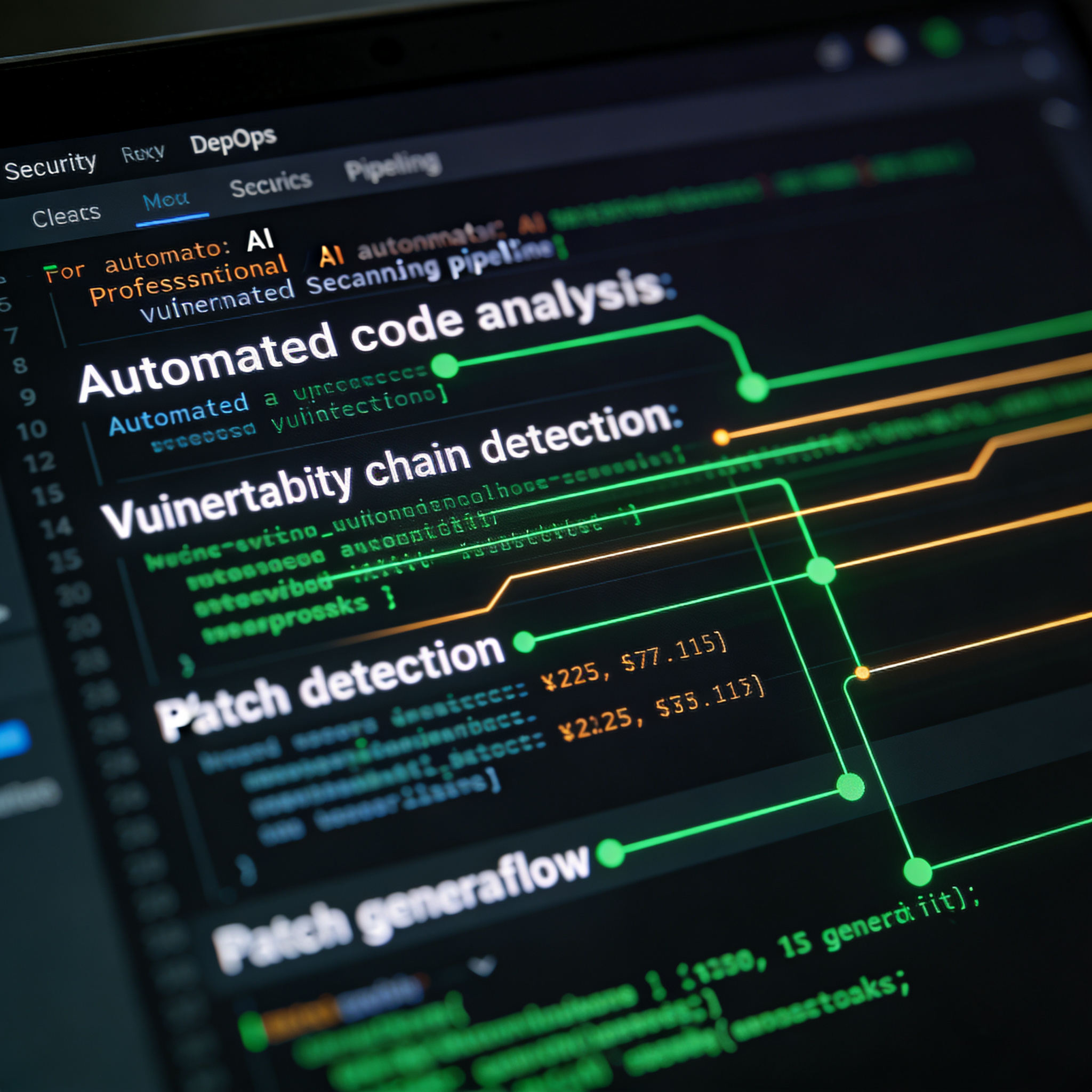
Story B — Open-Source Vulnerability Discovery Framework (402 pts / 116 comments): Anthropic open-sourced defending-code-reference-harness, a reference implementation for autonomous vulnerability discovery, verification, and patching powered by Claude. The framework supports threat modeling, static scanning, automated triage with execution-verified findings, and patch generation — all wrapped in a gVisor sandbox for safe autonomous operation. It's built on real-world experience from the Glasswing/Mythos partnerships with enterprise security teams.
These two stories seem to pull in opposite directions — one accelerates AI evolution, the other uses AI to secure code. But together they reveal a fundamental truth: AI agents are transitioning from productivity tools to core infrastructure. You can use them to build faster and to protect what you've built.
Background
Founded in 2021 with AI safety at its core, Anthropic has been steadily shipping products. Claude Code (2025) let developers code in natural language from the terminal. Claude Mythos Preview and Project Glasswing (May 2026) marked Anthropic's shift from "AI safety research" to "AI-powered security products."
Today's two announcements are two sides of the same coin: Anthropic is using AI to accelerate its own R&D internally, while simultaneously open-sourcing its AI-driven security capabilities to the entire ecosystem.
Key Comparison
| Dimension | Story A: AI Builds Itself | Story B: Vuln Discovery Framework |
|---|---|---|
| Type | Internal report + research data | Open-source reference implementation |
| Key Numbers | 80% AI-authored code, 4-month task doubling, 76% research success | 1,629 GitHub Stars (day one), 6-stage autonomous pipeline |
| Audience | Policymakers + tech community | Security teams + DevOps |
| Developer Takeaway | Understand the ceiling and trajectory of AI-assisted dev | A tool you can use today |
| Format | Anthropic Institute report | Open-source GitHub repo |
AI Builds Itself Deep Dive
80%+ of Anthropic Code Is Now AI-Written
The most striking data point: as of May 2026, over 80% of Anthropic's merged code was authored by Claude. This is production reality, not an experiment.
The velocity is equally impressive. In Q3 2025 (before Claude Code launched), each engineer produced ~400 lines of code per day. By Q2 2026, that number hit 3,200 lines — an 8x increase. Recognizing that line count is an imperfect metric, Anthropic ran a retrospective test with an automated Claude code reviewer and found that AI-written code scored 90%+ of human-level quality on both correctness and maintainability.
Open-Ended Task Success: 26% to 76% in 6 Months
This is the trend to watch. Anthropic categorizes tasks by open-endedness:
| Difficulty | Example | Nov 2025 | May 2026 |
|---|---|---|---|
| Well-Specified | "Fix the export button" | 80% | ~95% |
| Semi-Open | "Optimize training, find bottlenecks" | 55% | ~85% |
| Fully Open | "Training is crashing, find and fix it" | 26% | 76% |
A concrete example: a routine upgrade started crashing tens of thousands of training jobs. An engineer described the problem to a Claude Agent with logs and crash stacks. The agent autonomously investigated, identified the root cause, wrote the fix, and submitted the patch — no human intervention.
Autonomous Task Duration Doubles Every 4 Months
Anthropic tracks the maximum task duration Claude can reliably handle solo: from ~1 minute in early 2024, to ~30 minutes in early 2025, to ~4 hours in early 2026, and now ~16 hours. Each doubling takes roughly 4 months.
At this trajectory, by early 2027 Claude may autonomously execute multi-day tasks including setting up experimental environments, running training pipelines, analyzing results, and iterating.
Research Judgment — The Last Human Moat
The report honestly acknowledges that humans still have a comparative advantage in research taste and judgment — choosing which problems matter, which results to trust, and which directions are dead ends.
But evidence suggests this moat is shrinking. Anthropic sampled 129 "key moments" from research sessions where a human researcher made a judgment call and asked Claude for an alternative. In 58% of cases, Claude's judgment was equal or superior to the human's. AI isn't just catching up on execution — it's closing the gap on decision-making.
Vulnerability Framework Deep Dive
From Glasswing to Open Source
Project Glasswing (May 2026) demonstrated AI agents discovering 10,000+ vulnerabilities. Today's open-source defending-code-reference-harness encodes those learnings as a reusable reference implementation.
The core is a 6-stage autonomous pipeline:
Recon → Find → Verify → Triage → Report → Patch
Interactive Skills & Autonomous Harness
The framework offers two modes:
-
Interactive Claude Code Skills: Run
/quickstart,/threat-model,/vuln-scan,/triage,/patchin Claude Code for a supervised security audit. These skills only read and write files — no sandbox needed. -
Autonomous Harness: Once configured with gVisor, the pipeline runs fully autonomously: clone repos, compile with ASAN, dynamic analysis, crash verification, exploitability reports, and patch generation.
Why Open Source Matters
This isn't Anthropic's commercial product (that's Claude Security). It's a reference implementation — anyone can fork, customize, and port it to their stack (Java, Python, Rust), vulnerability class, or detector tool.
Anthropic built /customize to auto-port the pipeline. The onboarding path is deliberately practical:
| Phase | Time | Output |
|---|---|---|
| Day 1 | Interactive scan + triage | Threat model, static findings, candidate patches |
| Day 2 | Autonomous run on C/C++ lib | Reproducible crashes, exploitability reports |
| Days 3-5 | Customize for your target | Adapted full pipeline |
| Week 2 | Autonomous scanning + patching | Automated security pipeline |
HN Community Reaction
AI Builds Itself (595 comments)
The community split into two camps:
Proponents (majority):
- "80% AI-authored code is production reality, not an experiment"
- "4-month task doubling is more compelling than any benchmark"
- "The key finding: AI is improving in research judgment too"
Skeptics:
- "8x line count doesn't equal 8x productivity — Claude may be writing more boilerplate"
- "Anthropic reporting their own AI usage data is self-scoring"
- "The risk of recursive self-improvement: AI improving AI faster than humans can understand it"
Vulnerability Framework (116 comments)
Most focused on practical utility:
- "Finally an open-source reference, not just a blog post"
- "gVisor sandboxing is the right approach"
- "Day 1 to Week 2 path is realistic for teams that don't know where to start"
3 Actionable Takeaways
-
Try the vulnerability framework today: Clone
defending-code-reference-harness, run/quickstartin Claude Code. 15 minutes to see the full threat modeling → scanning → triage pipeline. No sandbox needed for interactive mode. -
Understand the AI self-evolution trajectory: 80% AI-authored code isn't unique to Anthropic — they're just the ones who published the data. Your team may be heading in a similar direction within 12 months. Automate code review and security now.
-
Security becomes an on-ramp, not a bottleneck: When AI can autonomously find and fix vulnerabilities, security stops being a gate. Integrate this framework into your CI/CD pipeline so every PR gets an automated security scan.
References
- When AI Builds Itself — Anthropic Institute
- Defending Code Reference Harness — GitHub
- HN: When AI Builds Itself (447pts/595cmt)
- HN: Vulnerability Discovery Framework (402pts/116cmt)
Monetization angle
How can you make money from this trend?
WayToClawEarn focuses on verified earn playbooks—not just news. Start from these cases.
n8n + OpenAI affiliate site
Automate content and affiliate monetization
Claude + n8n automation agency
Charge monthly for agent workflow builds
Related tutorials
Related news
- OpenAI Models Land on Google Cloud: Three-Cloud Coverage Complete, Codex Agent Workflows How to Choose
- Anthropic Launches Claude Duet: Proactive AI Agent vs Meta Muse vs OpenAI Dots — How to Choose
- THUNLP Open-Sources PilotDeck 2.0: Workspace Isolation + Smart Routing, Agent Task Cost to 1/6?
- Zhipu Open-Sources GLM-Legal: Harvey LAB #1 Open-Weight, How to Choose Legal AI?