Trump Signs AI Executive Order: 30-Day Voluntary Model Review Marks New Era of Federal AI Oversight
On June 2, 2026, Trump signed a scaled-down AI executive order requiring companies to voluntarily submit powerful AI models for 30-day government review. Hacker News reaction is sharply divided.
Public-source compilation
Synthesized from public posts/docs. Prefer the original source for primary claims.
How we review content · Primary source · White House / Politico / HN
Key Takeaways
On June 2, 2026, President Trump signed a scaled-down AI executive order requiring AI companies to voluntarily submit powerful new models for 30-day government review before public release. The final version, significantly watered down after weeks of internal reversals, still marks a step toward institutionalizing federal AI safety oversight.
At a Glance
- Date: June 2, 2026
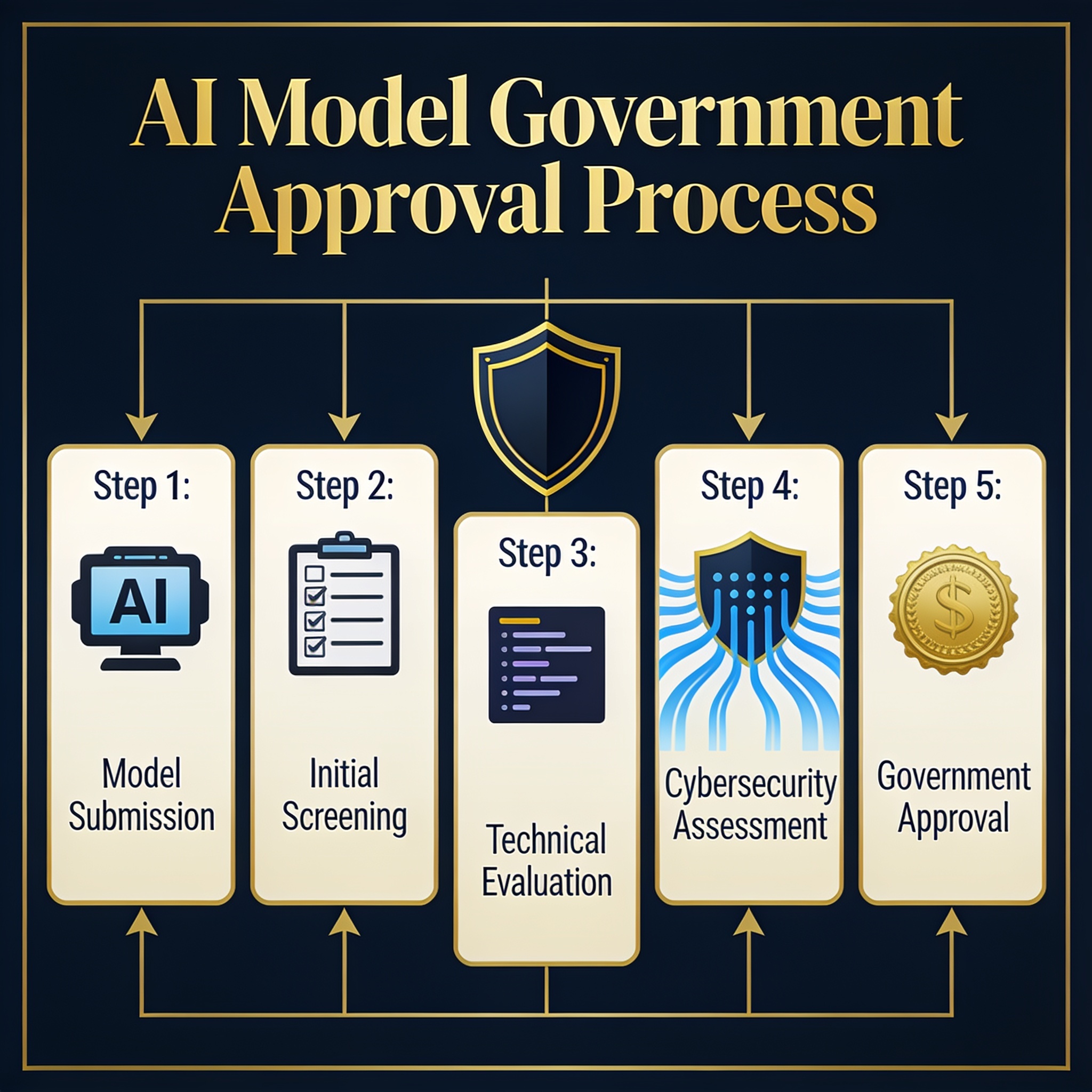
- Core requirement: Voluntary 30-day pre-release government review of "powerful AI models"
- Key changes: DOJ directed to prosecute AI-powered hacking; cybersecurity benchmarks mandated
- Affected parties: AI developers (Anthropic, OpenAI, Google, etc.), open-source community, AI safety researchers
- Context: Signed as Anthropic's IPO process kicks off, following months of high-profile AI security incidents
Background: From Mandatory Regulation to Voluntary Review
The executive order's path to signature was anything but smooth. Early drafts reportedly contained mandatory regulatory provisions, but weeks of internal debate and White House factional maneuvering resulted in a significantly scaled-back voluntary review mechanism.
The order addresses three main areas:
| Area | Details | Practical Impact |
|---|---|---|
| Model Review | AI companies voluntarily submit "powerful models" for 30-day government pre-release review | Non-binding, but sets precedent for future legislation |
| Cybersecurity | Directs federal agencies to improve AI security capabilities; establish benchmarks | Unclear funding; enforcement remains uncertain |
| Legal Enforcement | DOJ directed to prosecute individuals using AI models for hacking | Symbolic — existing laws already cover this |
HN Community Reaction: Divided
Hacker News reaction reveals a sharp divide. Critics argue the order lacks substance:
"Section 1 says nothing. Section 2 is basically 'improve cybersecurity if we can find funding.' Section 3 proposes a benchmark developers can optionally use." — euleriancon
More critical voices see it as a step toward restricting open-source AI:
"Step 1: Require companies to submit products for review. Step 2: Complain that OSS/Chinese models release without approval. Step 3: Prohibit on 'safety' grounds." — parliament32
Comparison with Previous AI Orders
This is not Trump's first AI-related executive order. In July 2025, he signed one targeting LLM "ideology" — requiring AI outputs to align with specific political values. Compared to that controversial order, the latest version uses more restrained language, but HN commenters widely view it as "incremental regulation."
The order also directs the Justice Department to pursue criminal cases against anyone using AI models to hack into computer systems. As one commenter noted: "Were we not pursuing criminal cases against these individuals previously?"
Practical Impact for AI Developers
Short-term (0-6 months)
- Voluntary review: Major AI labs (OpenAI, Anthropic, Google) will likely comply as a signal of good faith
- Open-source: Largely unaffected — the order targets "companies," not individual developers, and review is voluntary
- AI security startups: The cybersecurity benchmarking portion may create new market opportunities for AI safety assessment
Long-term (6-24 months)
- Possible legislation: If the mid-term election shifts Congressional sentiment, voluntary review could become mandatory
- Open-source implications: A shift from "voluntary" to "mandatory" would significantly impact Meta Llama, DeepSeek, and other open models
- International alignment: The EU AI Act took effect in 2025; US voluntary review may be an interim step
What to Watch
- Anthropic IPO: The timing overlaps heavily with Anthropic's IPO preparations — investors will watch how regulatory environment affects AI valuations
- Open-source response: Will Meta, DeepSeek, and others participate in "voluntary" review?
- EU AI Act interaction: US voluntary review + EU mandatory compliance means dual regulatory pressure for global AI companies
Related Reading
Monetization angle
How can you make money from this trend?
WayToClawEarn focuses on verified earn playbooks—not just news. Start from these cases.
n8n + OpenAI affiliate site
Automate content and affiliate monetization
Claude + n8n automation agency
Charge monthly for agent workflow builds
Related tutorials
Related news
- OpenAI Models Land on Google Cloud: Three-Cloud Coverage Complete, Codex Agent Workflows How to Choose
- Anthropic Launches Claude Duet: Proactive AI Agent vs Meta Muse vs OpenAI Dots — How to Choose
- THUNLP Open-Sources PilotDeck 2.0: Workspace Isolation + Smart Routing, Agent Task Cost to 1/6?
- Zhipu Open-Sources GLM-Legal: Harvey LAB #1 Open-Weight, How to Choose Legal AI?