Claude Opus 4.1 API Deprecation: 60-Day Notice to Migrate to Opus 4.8 at 67% Lower Cost
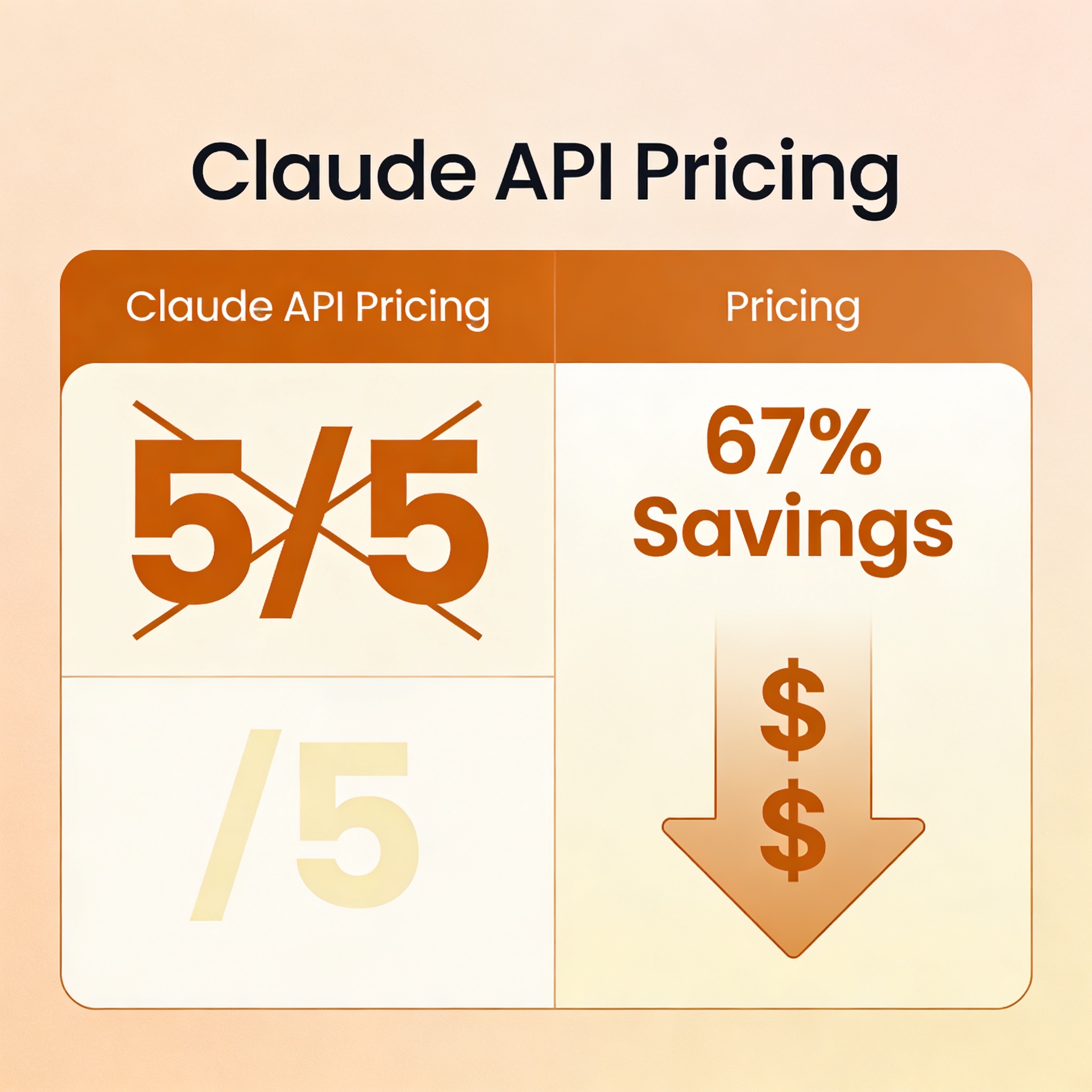
Anthropic notified developers on June 5, 2026 that Claude Opus 4.1 will retire from the API on August 5, 2026. Recommended migration target is Opus 4.8, which delivers stronger performance at 67% lower pricing ($5/$25 per MTok vs $15/$75).
2026年6月7日 · 阅读约 5 分钟
Key Takeaways
- June 5, 2026: Anthropic notified all Claude API developers that Opus 4.1 (claude-opus-4-1-20250805) will be retired on August 5, 2026 — a 60-day migration window.
- Recommended target: Claude Opus 4.8, which is broadly more capable across coding, reasoning, and agentic tasks.
- 67% cost reduction: Opus 4.8 is priced at $5 per million input tokens and $25 per million output tokens — down from Opus 4.1's $15/$75 pricing.
- Dynamic workflows default: For Max and Team plan users, Claude Code's dynamic workflows (including the ultracode setting) are now enabled by default.
What Happened
On June 5, 2026, Anthropic updated its model deprecations page to notify developers that Claude Opus 4.1 — a model that has served as a production workhorse for many AI-powered applications since its August 2025 launch — is entering its end-of-life cycle.
The model ID claude-opus-4-1-20250805 will stop responding to API requests on August 5, 2026, exactly one year after its original release. Developers currently using Opus 4.1 in production must migrate their workloads before this date to avoid service interruptions.
The Migration Path: Opus 4.8
Anthropic's recommended replacement is Claude Opus 4.8, released on May 28, 2026. The comparison is striking:
| Dimension | Opus 4.1 (Retiring) | Opus 4.8 (Recommended) | Improvement |
|---|---|---|---|
| Input Price | $15 / MTok | $5 / MTok | 67% cheaper |
| Output Price | $75 / MTok | $25 / MTok | 67% cheaper |
| AAI Index | — | 61.4 (#1 spot) | State-of-the-art |
| SWE-Bench Pro | — | 69.2% | Strong coding |
| Dynamic Workflows | Not available | ✅ Full support | Multi-agent orchestration |
| Launch Date | Aug 5, 2025 | May 28, 2026 | Current gen |
The migration itself is straightforward — Opus 4.8 is a drop-in replacement via model ID claude-opus-4-8. Developers change the model identifier, re-run evaluation suites, and confirm prompt caching behavior. No architectural changes are required.
The Broader Picture: Claude's Deprecation Cadence
Anthropic has been steadily tightening its model lifecycle management. Claude Sonnet 4 and Claude Opus 4 were retired on April 20, 2026 (with 6 days notice from the April 14 notification). The Opus 4.1 notification on June 5 gives developers a more generous 60-day window — suggesting Anthropic has learned from the backlash over shorter deprecation timelines.
For developers still running Opus 4 or Opus 4.1 in production, the direction is unambiguous: every model older than Opus 4.8 is now either retired or on the deprecation track. The active Claude API lineup now consists of:
- Claude Opus 4.8 — Current flagship (GA, May 28, 2026)
- Claude Opus 4.7 — Previous gen (available, but migration to 4.8 recommended)
- Claude Sonnet 4.5 — Mid-range workhorse
- Claude Haiku 4.5 — Fast/cheap option
- Claude Mythos — Specialized preview model
What This Means for Developers
For API users: If you have Opus 4.1 hardcoded in any application, CI/CD pipeline, or agent harness, flag it for replacement now. The 67% cost reduction to Opus 4.8 means this migration not only avoids a service interruption — it saves money immediately.
For Claude Code users: The dynamic workflows feature (ultracode setting) is now on by default for Max and Team plan subscribers. This means Claude Code can automatically orchestrate 10s to 100s of parallel subagents for complex tasks without manual workflow creation. Enterprise plans can opt in via admin settings.
For cost-conscious teams: The Opus 4.1 → 4.8 migration is arguably the single highest-impact cost optimization available in the Claude ecosystem today. A team spending $10,000/month on Opus 4.1 API calls would pay approximately $3,300/month for equivalent workloads on Opus 4.8 — a $6,700/month saving.
Community Reaction
The deprecation notice has been discussed across developer forums, with most reactions falling into two camps:
Pragmatic: "Opus 4.8 is genuinely better and cheaper — this is an easy migration." The pricing differential alone makes the switch a no-brainer for most teams.
Cautious: "60 days is tight for teams with extensive eval suites and regression testing." Developers running complex agentic workflows on Opus 4.1 are advised to start migration testing immediately rather than waiting until July.
A notable thread on Reddit's r/ClaudeAI highlighted that some teams had already migrated to Opus 4.7 or 4.8 on their own timeline, meaning the deprecation notice merely formalizes what was already underway.
Action Items
- Immediate (this week): Audit your codebase for hardcoded
claude-opus-4-1-20250805references. Replace withclaude-opus-4-8in staging environments and run evaluation suites. - Within 30 days: Complete regression testing on Opus 4.8. Compare output quality on your specific use cases (especially if you rely on structured JSON output or long-context reasoning).
- By August 1: Migrate all production workloads and remove Opus 4.1 fallback paths. Confirm prompt caching behavior — Opus 4.8 has a lower 1,024-token minimum cacheable prompt length, which may actually improve caching efficiency.
- Enable dynamic workflows: If you're on a Max or Team plan, test the ultracode setting on a representative complex task to evaluate whether automatic parallel agent orchestration improves your team's throughput.
Related Reading
- Anthropic official: Model deprecations page
- Anthropic official: What's new in Claude Opus 4.8
- Anthropic official: Claude API pricing
Tools Mentioned
This article discusses Anthropic's Claude and Claude Code platform. These are core P0 tools in the AI coding ecosystem.
Internal Links
- Want to learn how to migrate your AI tool stack? Check our AI Coding Tool Migration Guide
- See how developers build production workflows with Claude Code: Claude Code Production Setup